In 2026, roughly 86 out of every 100 students around the world already use AI to help them study, according to survey data from the Digital Education Council covering 16 countries. That single number tells you AI in education has moved from a classroom experiment to an everyday habit. But adoption is only half the story. The real question is what students, teachers, and parents actually gain from it, and whether it solves problems that tuition, textbooks, and one-size-fits-all classrooms never could.
This guide breaks down the real benefits of AI in education, backed by current data, classroom examples, and a look at how a platform like GuruKool AI turns these benefits into daily practice for students, teachers, and schools. For families and school leaders comparing options, understanding these benefits of AI in education is the first real step toward choosing the right platform instead of guessing.
The Hidden Cost of Traditional Learning Support
Every student has had this moment: stuck on a concept at ten at night, with no tutor, no teacher, and no one to ask. Multiply that by millions of students every evening, and you get one of the biggest unsolved problems in schooling today. Help almost never arrives at the exact moment a student needs it.
Why Tuition and Tutoring Fall Short
Private tuition works, but it is expensive, time-bound, and often out of reach for many families. A tutor might be available for two hours a week, yet doubts show up every single day. When a session ends, the student is back on their own until the next appointment, and momentum often gets lost in that gap.
- Fixed hours that rarely match when a doubt actually comes up
- Recurring monthly costs that add up over a full school year
- No easy way to revisit a past explanation once the session ends
- Limited attention when one tutor manages several students at once
The Price of One-Size-Fits-All Teaching
Classrooms, by design, teach to the middle of the group. A fast learner gets bored waiting for the rest of the class to catch up. A student who needs more time falls behind before anyone notices. Neither outcome is anyone’s fault; it is simply what happens when one explanation has to serve thirty different learning speeds at once.
Public school classrooms in many countries average well over thirty students per teacher, which leaves only a few minutes of individual attention per student across an entire class period. This is exactly the gap that AI in education is built to close, not by replacing teachers, but by filling the hours and the personal attention that traditional methods cannot stretch far enough to cover. Instead of one explanation trying to serve an entire room, AI in education gives each student a version of that explanation tuned to how they actually learn.
Top Benefits of AI in Education for Students
The benefits of AI in education show up most clearly in a student’s daily routine, not in abstract theory. Here is what changes when AI-powered support becomes part of everyday studying.
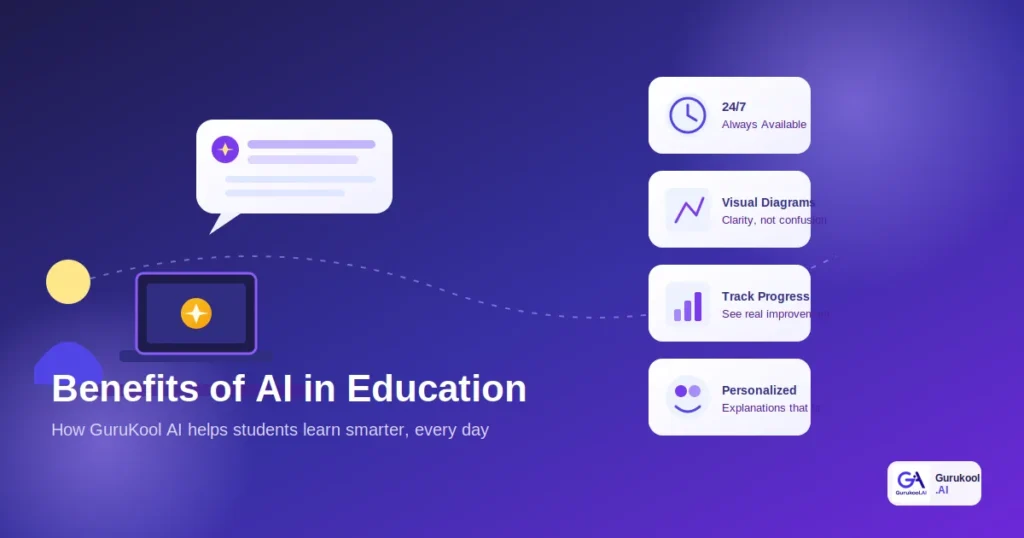
24/7 Learning Support Whenever It’s Needed
Doubts do not wait for office hours. Whether it is a late-night exam cram session or a Saturday morning homework block, AI-based tools answer the moment a question comes up, not the next day in class. This constant availability is one of the most requested features among students preparing for board exams and competitive tests alike.
Personalized Explanations for Every Learning Pace
Two students can ask the exact same question and need two completely different answers. One might need a simple analogy; another is ready for the deeper, technical version. AI-driven AI tutor platforms explain step-by-step at the level the student is actually at, instead of handing everyone the same generic response.
Visual Learning Through AI-Powered Diagrams
Some concepts, like geometry proofs, biology processes, and circuit diagrams, are genuinely hard to picture through text alone. Visual, step-by-step explanations turn abstract ideas into something concrete on screen. A 2025 Harvard University study on introductory physics found that students working with an AI tutor learned more than twice as much in less time compared to students in a traditional active-learning classroom, largely because explanations could be broken down and re-shown as many times as needed.
Want your child to get this kind of instant, visual explanation for every subject? See how GuruKool AI’s AI Tutor works and try a free walkthrough.
Benefits of AI in Education for Teachers and Schools
Students are not the only ones who gain from AI in education. Teachers and school administrators are seeing measurable time and workload benefits too, according to recent education workforce surveys.
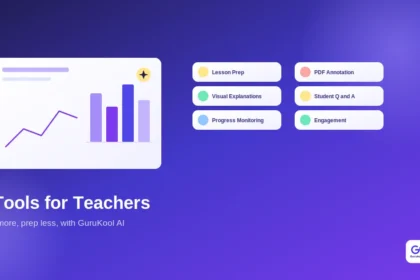
Reducing Teacher Workload
A Gallup survey covering thousands of educators found that roughly 60 percent of teachers in the United States already use AI tools in their work. Among teachers who use AI weekly, the average time saved is close to six hours per week, which adds up to nearly six extra weeks over a full school year. That time typically goes back into lesson planning, grading, and one-on-one attention.
Data-Driven Insights Into Student Progress
Without visibility into what a student has actually mastered, teachers are often guessing where to focus next. AI-based tracking shows patterns over time, flagging which topics are strong and which need more practice. This turns vague impressions into a clear, evidence-based plan for the next lesson. Schools piloting AI in education programs often report that this kind of data changes staff meetings from guesswork discussions into focused conversations about specific students and specific gaps.
Supporting Large Classrooms Without Losing Personal Attention
A classroom of forty students cannot get individual explanations from one teacher during a single period. AI-based support acts as a second layer of help, answering routine questions so teachers can spend class time on discussion, problem-solving, and the students who need the most guidance. In this sense, AI in education does not compete with the teacher; it clears the routine work off their plate so the harder teaching can actually happen.
Ready to bring these benefits into your classroom? Explore GuruKool AI for schools and teachers to see the analytics dashboard in action.
AI in Education vs Traditional Learning: A Side-by-Side Comparison
It helps to see the difference in one place. The table below compares how traditional learning support stacks up against AI in education when it comes to the things that matter most day to day.
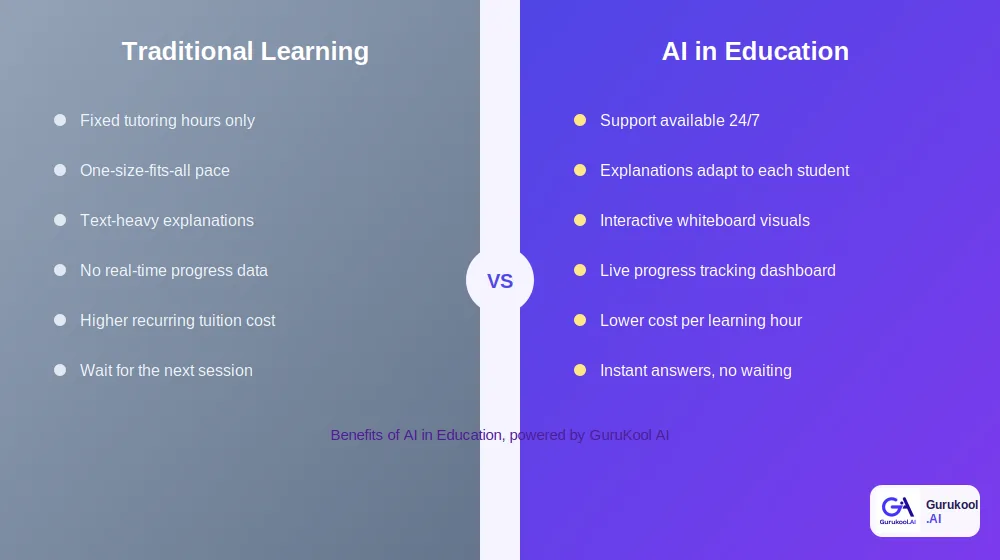
Traditional learning versus AI in education, compared side by side
| Factor | Traditional Learning | AI in Education (GuruKool AI) |
|---|---|---|
| Availability | Fixed hours, limited slots | 24/7, on demand |
| Personalization | Same pace for the whole class | Adjusts to each student’s level |
| Visual explanations | Mostly text and verbal | Interactive whiteboard diagrams |
| Progress tracking | Occasional tests and report cards | Continuous, real-time analytics |
| Cost over a year | Recurring tuition fees | Lower cost per learning hour |
| Response time | Wait for the next session | Instant, in the moment |
Speed and Accessibility
Traditional support depends on someone else’s schedule. AI in education removes that dependency, so a student in a small town has access to the same instant explanations as a student in a major city, as long as there is an internet connection. This is one of the reasons Asia Pacific and other regions with uneven access to tutoring centers are seeing some of the fastest growth in AI in education adoption worldwide.
Personalization and Adaptability
A classroom teacher cannot realistically rewrite an explanation six different ways in the same period. AI-driven platforms can, adjusting depth, examples, and pace automatically based on how a student responds.
How GuruKool AI Delivers These Benefits in One Platform
Knowing the benefits of AI in education is one thing. Getting them without juggling five separate apps is another. This is exactly the gap GuruKool AI is built to close, bringing every piece of the learning experience into a single platform.
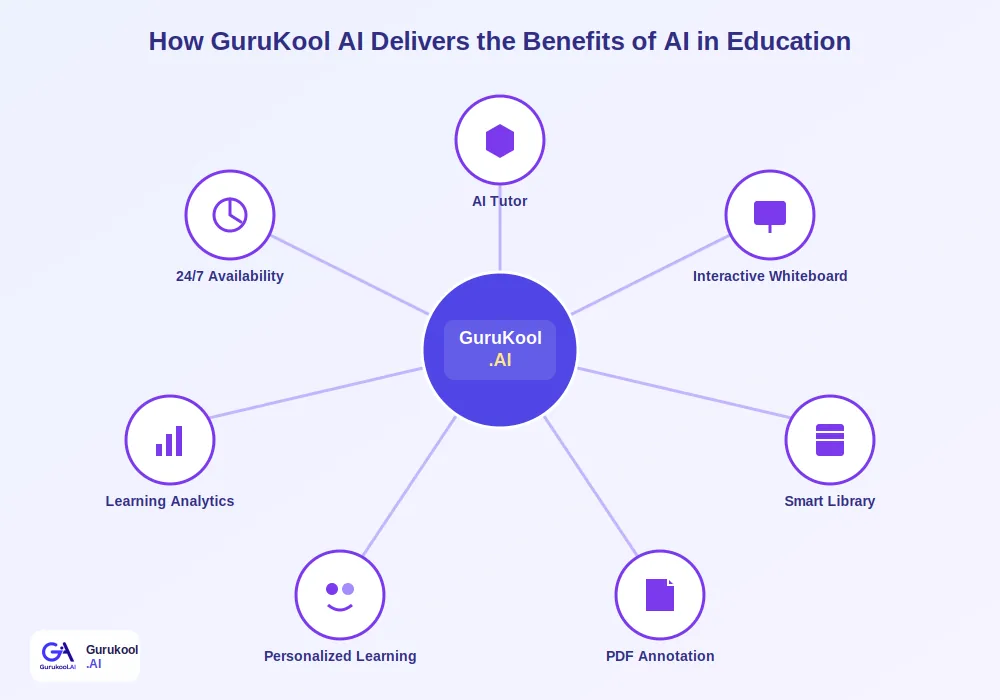
How GuruKool AI brings the benefits of AI in education together in one platform
AI Tutor and Interactive Whiteboard
The AI Tutor answers questions instantly and explains concepts at the student’s actual level, any time of day. When a topic needs a visual, the interactive whiteboard learning tool turns the explanation into a step-by-step diagram for math, geometry, and science, so abstract ideas become easier to see. Together, these two features cover two of the most requested benefits of AI in education: instant answers and visual clarity, in one place instead of two separate apps.
Smart Library and PDF Annotation
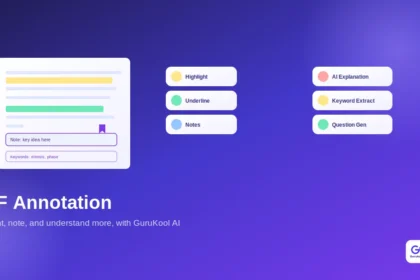
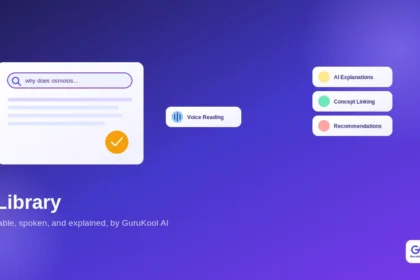
The Smart Library recommends the right learning material based on what a student is currently studying, instead of leaving them to search on their own. PDF Annotation goes a step further, turning static textbooks and notes into interactive study guides that can be questioned, summarized, and explained section by section.
Personalized Learning and Progress Analytics
Personalized Learning adjusts the depth and pace of every explanation based on how well a student is actually understanding the topic. Learning Analytics then tracks that progress over time, so students, teachers, and parents can see exactly where improvement is happening and where it still needs work.
- AI Tutor: instant, step-by-step answers at any hour
- Interactive Whiteboard: visual explanations for tough concepts
- Smart Library: curriculum-aligned recommendations
- PDF Annotation: textbooks turned into interactive guides
- Personalized Learning: pace and depth matched to the student
- Learning Analytics: clear, ongoing progress tracking
See every feature working together in one dashboard. Book a live GuruKool AI product walkthrough today.
Real Classroom and Student Scenarios
Numbers only tell part of the story. Here is what the benefits of AI in education look like in an actual evening of studying.
A Student Preparing for Board Exams
Consider a Class 10 student preparing for a board exam. It is nine at night, and she is stuck on a chemistry concept she has seen in class but never fully understood. Here is what a typical AI-supported study session looks like:
- She opens GuruKool AI and asks the AI Tutor to explain the reaction step by step.
- When she is still unsure, the Interactive Whiteboard illustrates the reaction visually, one stage at a time.
- Once the concept clicks, she opens her PDF textbook chapter inside the app.
- PDF Annotation summarizes the key points and generates a few practice questions on the spot.
- The next morning, her progress dashboard shows the topic moving from “weak” to “improving.”
That sequence, repeated across subjects and weeks, is the practical difference between reading about the benefits of AI in education and actually living them.
A Teacher Managing a Large Classroom
Now picture a science teacher with forty students across two sections. Instead of answering the same recurring question from five different students during office hours, she points the class toward AI-based support for routine doubts. Analytics from platforms like GuruKool AI then flag which topics the whole class is struggling with, so she can use class time for a focused review instead of guessing where to start.
Measurable Results Across Adoption
These scenarios line up with broader research. Industry surveys report that AI personalization is linked to roughly a 70 percent boost in course completion rates, and some studies on AI-enhanced learning environments report meaningfully higher test scores compared to traditional-only settings. None of this replaces good teaching. It simply gives students and teachers more hours of support than a fixed schedule ever could.
The pace of change backs this up. Global student use of AI in education jumped from about two-thirds of students in 2024 to more than nine in ten by 2025, one of the fastest single-year adoption curves ever recorded in education technology. Market analysts tracking AI in education put the global market at roughly ten billion dollars in 2026, with projections of continued rapid growth through the end of the decade as more schools and families adopt these tools.
Before moving on, it helps to answer a few of the most common questions families and educators ask when they first start researching AI in education and comparing it against familiar tools like tuition or a general chatbot.
Frequently Asked Questions About AI in Education
What are the main benefits of AI in education?
The main benefits of AI in education include 24/7 learning support, explanations personalized to each student’s pace, visual diagrams for difficult concepts, and continuous progress tracking. Platforms like GuruKool AI combine these into one place, reducing the need to juggle separate apps for tutoring, notes, and revision.
Does AI in education replace teachers?
No. AI in education fills gaps that teachers cannot cover alone, like answering doubts at 10 p.m. or repeating an explanation five different ways. Teachers still guide curriculum, motivation, and classroom discussion. AI simply extends support beyond fixed classroom or tuition hours, so students get help exactly when they need it.
Is AI in education safe for children to use?
Reputable AI education platforms are designed around curriculum-aligned content, moderated responses, and parental visibility into progress. As with any online tool, parents should review privacy settings and monitor usage, especially for younger students. GuruKool AI, for example, focuses explanations on schoolwork and tracked learning goals rather than open-ended chat.
How does GuruKool AI personalize learning for each student?
GuruKool AI adjusts explanation depth, pace, and examples based on how a student responds to each topic. If a student struggles, it simplifies the explanation and adds visuals through the Interactive Whiteboard. If a student grasps concepts quickly, it introduces more advanced material, tracked continuously through Learning Analytics.
Is AI-based learning cheaper than traditional tuition?
Generally, yes. Traditional tuition charges recurring fees for fixed weekly hours, while AI-based platforms typically charge a flat subscription for unlimited access. Over a school year, this often works out to a lower cost per hour of learning support, especially for families juggling multiple subjects or children.
Conclusion
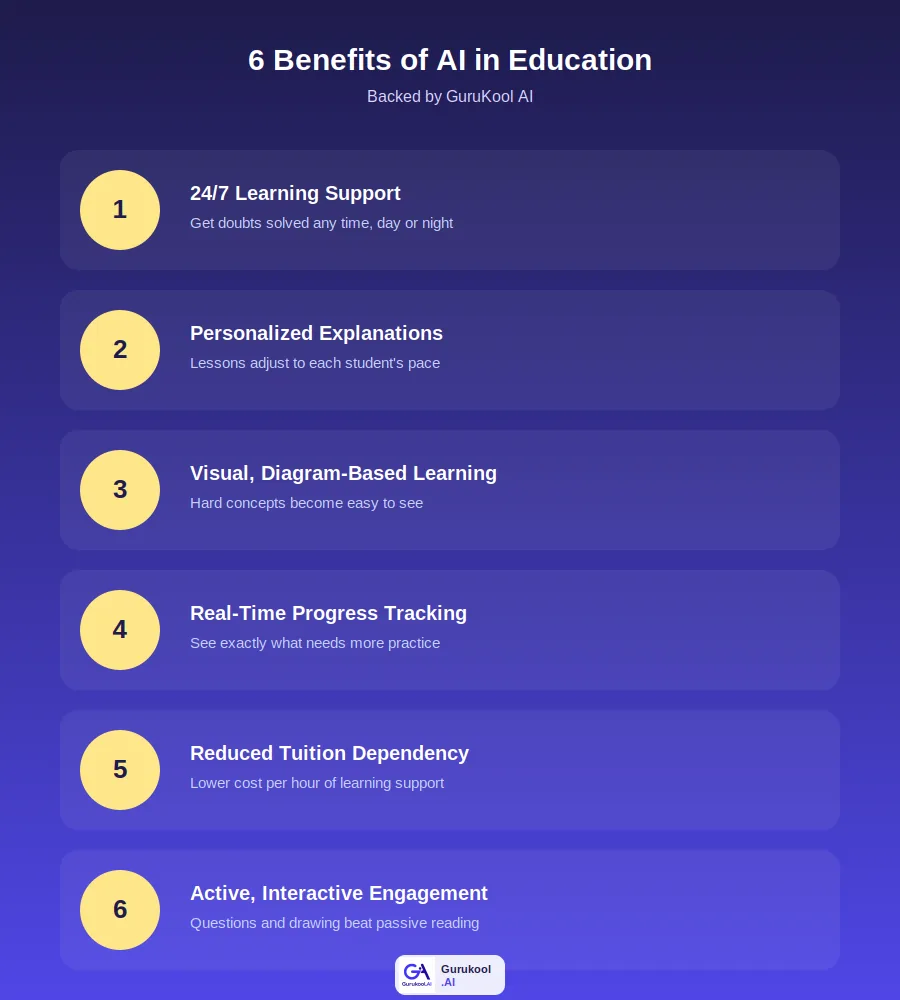
Six benefits of AI in education, summarized
The benefits of AI in education are not about replacing teachers or tuition entirely. They are about filling the gaps traditional methods cannot: availability, personalization, visual clarity, and real progress tracking. With the global AI in education market climbing past ten billion dollars in 2026 and adoption already touching the majority of students worldwide, this shift is no longer optional for schools that want to stay competitive. Every month spent waiting is a month of doubts left unanswered, which is exactly why more families are moving toward AI in education now rather than later.
GuruKool AI brings all of these benefits into a single platform, so students spend less time switching between tools and more time actually learning.
Curious what this looks like for your child, classroom, or school? Start a free GuruKool AI demo and see personalized, always-available AI support in action.
Sources: Grand View Research, AI in Education Market Report; Resourcera, AI in Education Statistics 2026.